
Slovenská verzia / English version
The village of Kozelník lies in the Štiavnica Mountains, in the narrow valley of the Jasenica stream. The village is part of the Štiavnické vrchy Protected Landscape Area. Two protected areas of European importance, which are part of NATURA 2000, extend into the village’s territory: Skalka (SKUEV0266) and Suť (SKUEV0265). These areas belong to the system of protected areas of the European Union’s member states, whose main purpose is to preserve Europe’s natural heritage. Kozelník is a small, cozy and interesting village surrounded by beautiful nature, with a history of more than 600 years.
KOZELNÍK: A HISTORIC CROSSROADS
Kozelník is a picturesque little village at an altitude of 390 m above sea level, in the narrow valley of the Jasenica stream. Today, approximately 174 people live permanently in this village with a rich past.
- Origin of the village, 1424: The historical roots of settlement in this locality reach back to the 15th century, with the first written mentions in the region dating from 1424 to 1518. In the oldest charter, issued by King Sigismund of Luxembourg, the settlement is mentioned under the name Poruba. Because of iron ore processing at the local hammer mill, it was later called Železník, and since 1553 it has borne its permanent name, Kozelník.
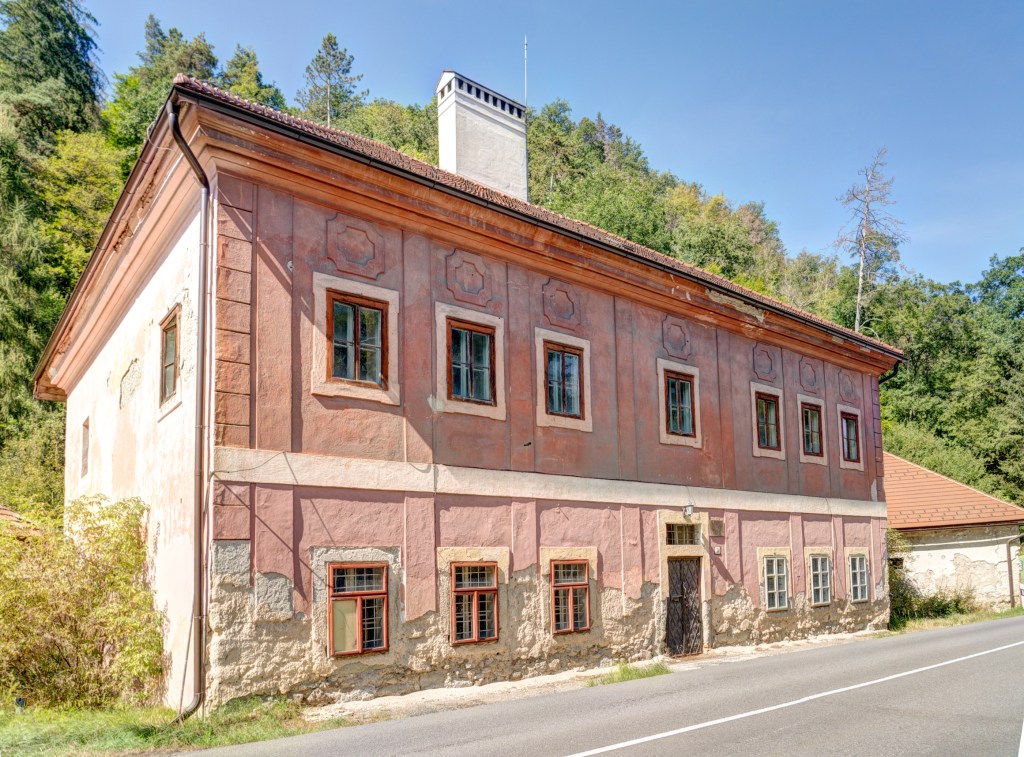
- Magna Via and the relay station: Kozelník has always been a strategic transport hub. In the 18th century, the famous imperial-royal postal and trade road Magna Via (the “Great Road”) passed through here. In the village there was an important stagecoach and horse-changing station (the Carters’ Inn), where weary carters rested and changed horses before the demanding mountain climb toward Banská Štiavnica.
- Where to find it today: This massive historic building with typical architecture (house number 50) still stands in the village. It is located directly on the main road I/51, on the right-hand side when traveling toward Banská Štiavnica.
- National Cultural Monument: the Bell Tower (19th century): The village’s unmistakable landmark is the historic timber-and-masonry bell tower from the 19th century. This national cultural monument has undergone a successful complete reconstruction and has been saved for future generations.
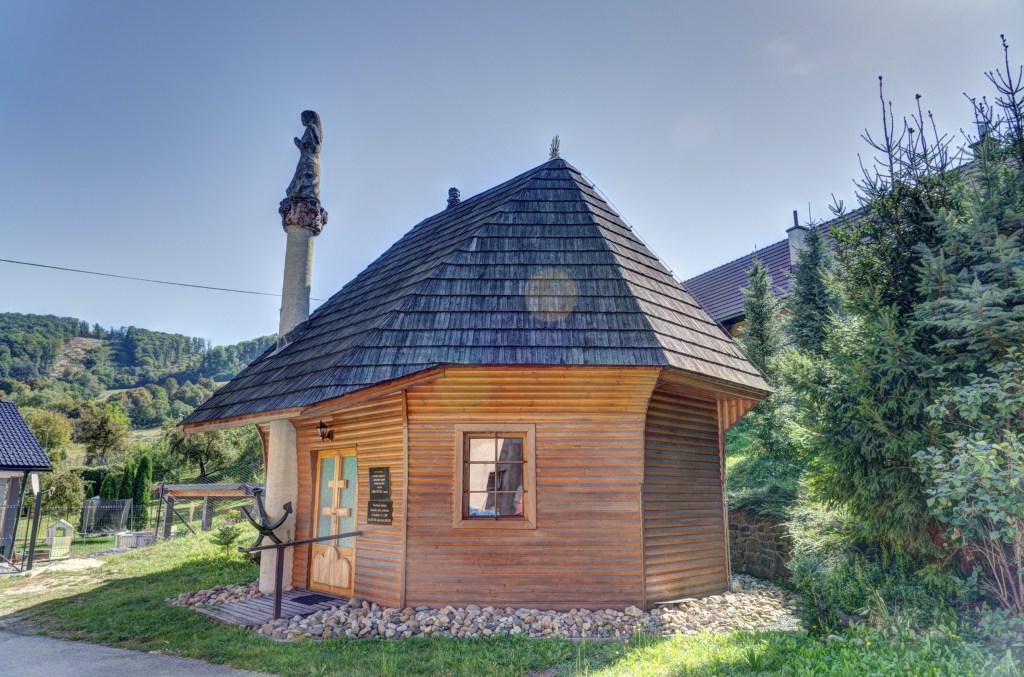
- A unique little church, the “Ship of Hope” (2006): An architectural curiosity of the village is the modern Roman Catholic Chapel of the Sacred Heart of Jesus, built in 2006. It has the distinctive form of a ship with a mast shaped like a double cross, inspired by the prophetic dream of Saint John Bosco about the Church sailing through history.
A place where the cycling route brings the history of famous rails back to life
You are in the picturesque village of Kozelník, through which the popular Štiavnická Anča cycling route passes. This route, running along the captivating surroundings of the Jasenica stream, is not just an ordinary path for cyclists. It is a living memorial to the technical skill of our ancestors and a symbol of the immense determination of the post-war generation.
THE ORIGINAL “ŠTIAVNICKÁ ANČA”: THE FIRST NARROW-GAUGE STEAM RAILWAY
The story of local transport began deep in the 19th century. The wealthy mining town of Banská Štiavnica urgently needed a reliable connection to the main railway network in the Hron valley.
- A world rarity: In 1873, a narrow-gauge line (with a track gauge of only 1000 mm) connecting Hronská Dúbrava with Banská Štiavnica was put into operation. It was the first narrow-gauge steam railway in all of what was then Hungary.
- Why “Anča”? Trains on this line ran slowly, tackled demanding mountain gradients and whistled loudly in the bends. The locals affectionately nicknamed this little steam train the “Štiavnická Anča”.
- Kozelník as an important stop: Our village was an integral part of this romantic but technically demanding line. However, with the development of industry, the old narrow-gauge line no longer had sufficient capacity, since goods had to be laboriously transshipped at Hronská Dúbrava from larger wagons.
THE LEGENDARY “YOUTH RAILWAY”: THE WORK OF THOUSANDS OF HANDS
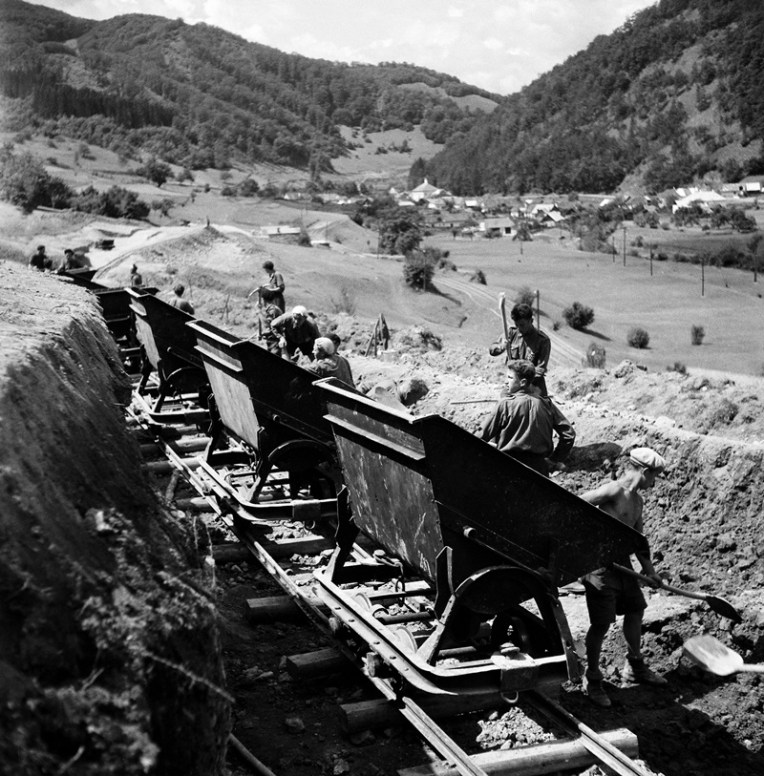
After the end of the Second World War, a strategic decision was made to replace the old narrow-gauge line with a modern railway of standard, wide gauge (1435 mm). However, there was a critical shortage of labor and equipment. Bricks, pickaxes and shovels were then taken up by the young people of the day.
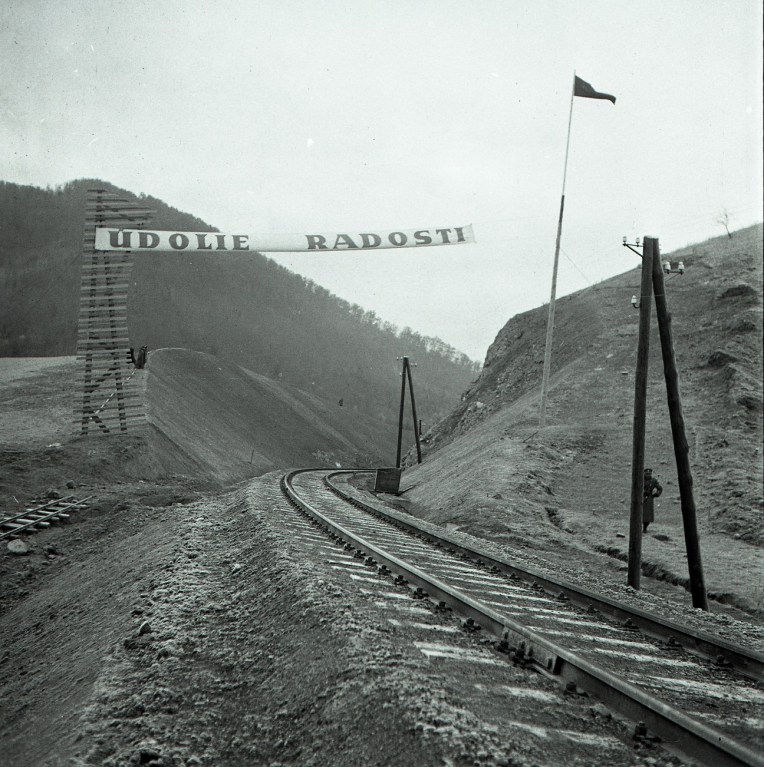
- The birth of the construction of the century: Construction of the new line, the second one in sequence, officially began on April 5, 1948. The project was given the proud name “Youth Railway” (Trať mládeže).
- The power of solidarity: An incredible 47,162 young volunteers gradually arrived to work on the construction. They were mostly students and young workers, not only from Slovakia but also from neighboring European countries. Together they lived in camps scattered along the line.
- Enormous effort in difficult terrain: The young people worked in the extremely demanding conditions of the Štiavnica Mountains, often with only minimal technical equipment. During construction they moved more than 628,000 m³ of earth by hand and excavated the famous Štiavnica Tunnel, 1,194 meters long.
- Ceremonial opening: They completed this gigantic work in a record 18 months. The first ceremonial train ran along the new Youth Railway on October 30, 1949, and it carries passengers to Banská Štiavnica to this day.
TODAY’S CYCLING ROUTE: IN THE FOOTSTEPS OF HISTORY
The present-day green Štiavnická Anča cycling route ingeniously uses the body and original embankment of the very first, now-closed narrow-gauge railway from 1873.
Because the old engineers had to design a route with a very gentle gradient for steam trains, the cycling route runs mostly along pleasantly flat terrain. This makes it ideal for families with children and recreational riders.
What will you see along the route? Heading toward Banská Štiavnica, the path leads you past unique wetlands and the historic stone aqueduct in Kysihýbel, over which water from the mining reservoirs (tajchy) once flowed.
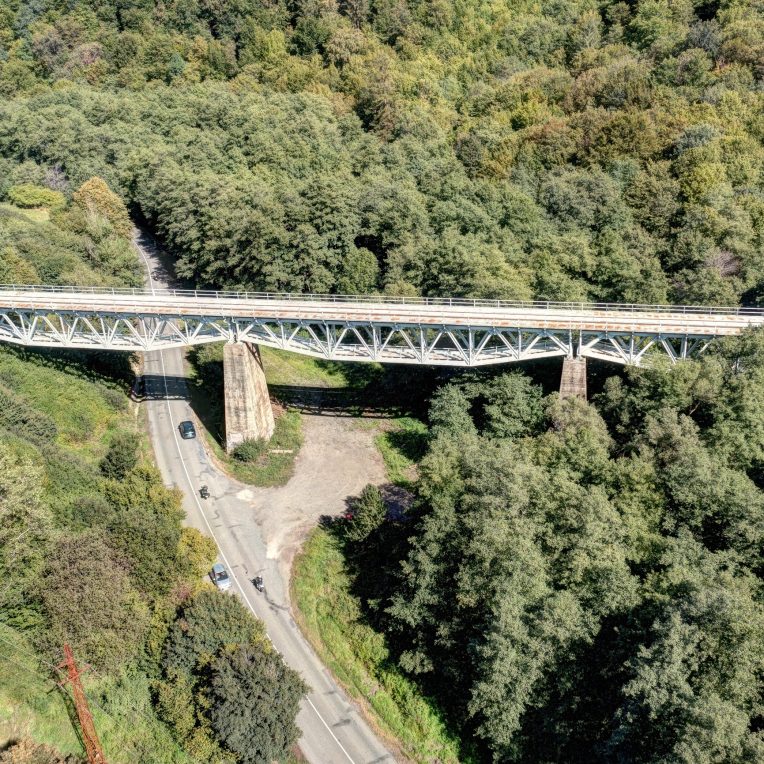
A little farther on, you can watch from your bicycle the present-day “Youth Railway,” where tracks still alternate with impressive viaducts and bridges.
We wish you a pleasant rest in the village of Kozelník and many happy kilometers full of discovering history on your journey!

